Rackham 1720

“The seaside town of St Augustine is haunted, everyone knows that.”
For fifteen-year-old Jack Rackham, a descendant of the notorious pirate Calico Jack, it was supposed to be a relaxing summer of great surfing, exploring the Ancient City and adventures on his very own boat, Bad Latitude. His discovery of a three hundred year old diary changed all of that.
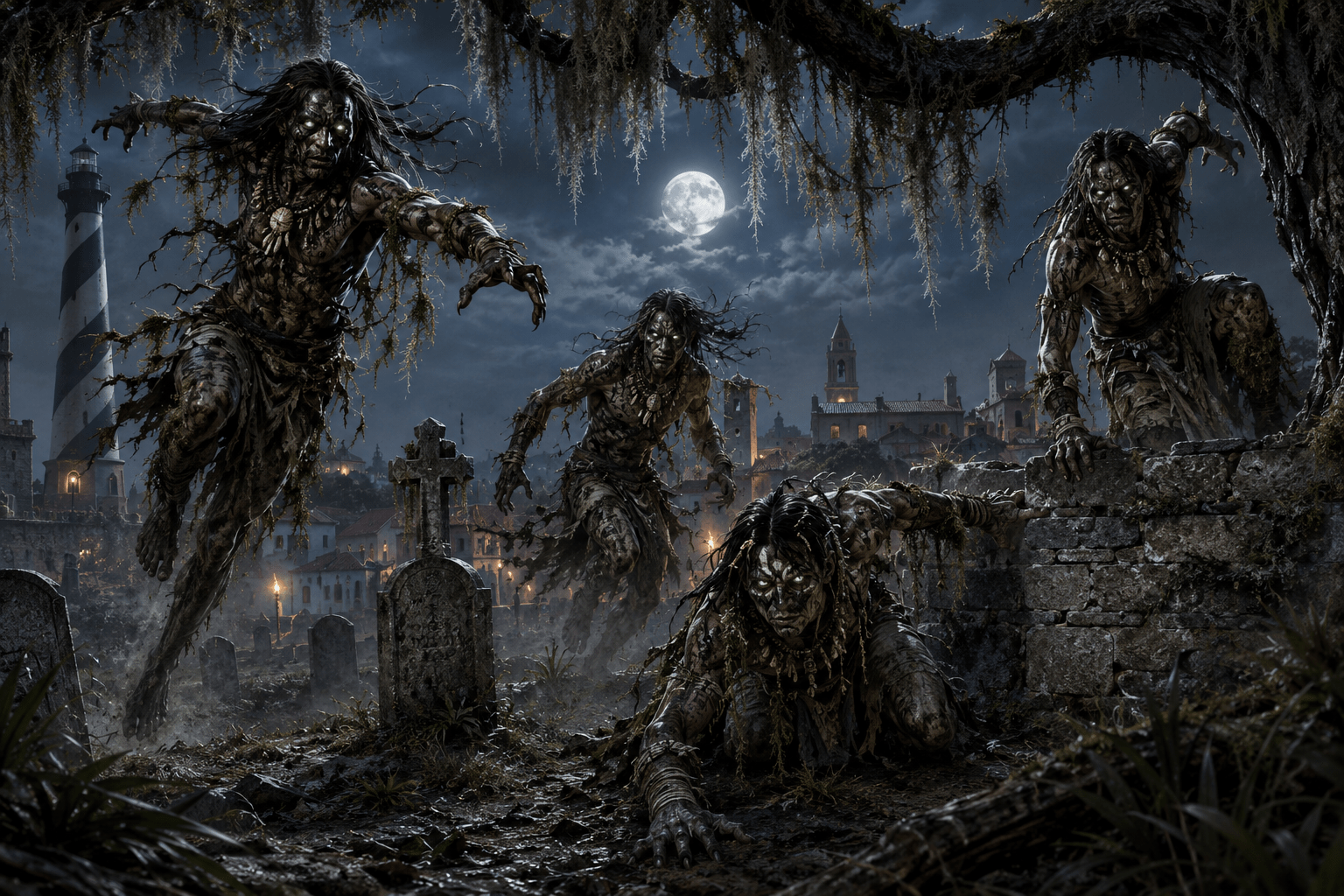
When the secrets of the old book are unraveled, Jack enlists the help of his best friend Kai, and together, they begin the dangerous search for the hidden fortune buried beneath the abandoned burial grounds of Rattlesnake Island. Digging under the light of the full moon, the boys are unaware that a terrifying menace waits in the darkness, determined to prevent their escape. Supernatural guardians of the island are clawing and dragging their way through the snake-infested marsh grass, surrounding the pair, working to create a deadly ambush, while offshore lurks a mysterious ship, shrouded in an eerie green fog, flying the flag of the long dead Calico Jack Rackham.
Before daybreak, Jack and Kai will face a desperate struggle for survival, ultimately choosing between unimaginable wealth and friendship.
Will they put their own lives on the line to save one another from the evil that stalks their every move, or will the promise of great riches lead to tragedy and despair?
Meet the Crew
Three fearless friends. Countless adventures. One unforgettable journey.

The Characters

Jack Rackham

Kai Mattison

Valerie “Val”

Nan

Pop
Read a Sample
There was no escaping the hurricane’s fury. The center mast snapped, toppling with a thunderous crash as the doomed ship listed hard to port, exposing its massive keel. The hull’s planking splintered inward from the pounding of the raging seas, flooding the cargo holds, forcing the crew and passengers to scramble from the shelter below into the teeth of the violent storm. Solomon Cresson, a stout member of the crew, was the last to climb the twisting ladder to the deck above. With the Captain of the ship missing and presumed lost, Cresson took charge. He shouted above the gale, ordering all aboard to stay with the ship for as long as there was a structure to grasp. The listing vessel was aground in the shallows, beam to sea, being smashed by fierce waves and buffeted by driving winds as the passengers clung to the fallen rigging, struggling for survival against the rushing flood, and collapsing timbers.
By first light, it was over. Those not drowned or washed to sea were greeted with the spectacular view of a white sandy beach, two hundred yards from their wrecked merchant ship, The Reformation. Twelve souls had been lost. The survivors, battered, bloodied, and exhausted, salvaged what they could from the ship. A single long boat, lashed to the bow, was all that remained of the original four, the last hope to cheat death once more. The crew heaved it overboard and shuttled passengers, bodies and a meager supply of provisions ashore. Cresson made the last trip alone, carefully concealing a small wooden crate containing a fortune in gold and gemstones, the property of the shipping company. He had planned the theft long before the ship left port.
Rowing toward shore, with thirty yards of surf to conquer, he stared in horror as a band of Jobe tribesman rushed upon the stranded castaways. As the small boat scraped the sandy bottom, Cresson tossed the box carelessly into the shallows and charged into the center of the skirmish. Knowing they were in Spanish territory, he roared at the attackers, mixing fluent Spanish with intimidating gestures. The ruse worked and the Jobes abandoned the survivors to return to their village. With the reprieve, the crew and passengers prepared for the long night ahead while Cresson secretly retrieved the treasure from the sea. Hidden from the others, he buried the gold behind a dune, which aligned with the listing masthead of the shipwreck.
As darkness fell, the warriors, led by their Cacique, returned. Unable to resist, the outnumbered survivors were herded to the tribal village, stripped of all possessions, and held captive. Killing the stranded travelers was not an option for the Indian King, as the Spaniards controlling the area would view such a slaughter as an act of aggression.
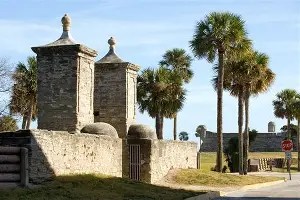
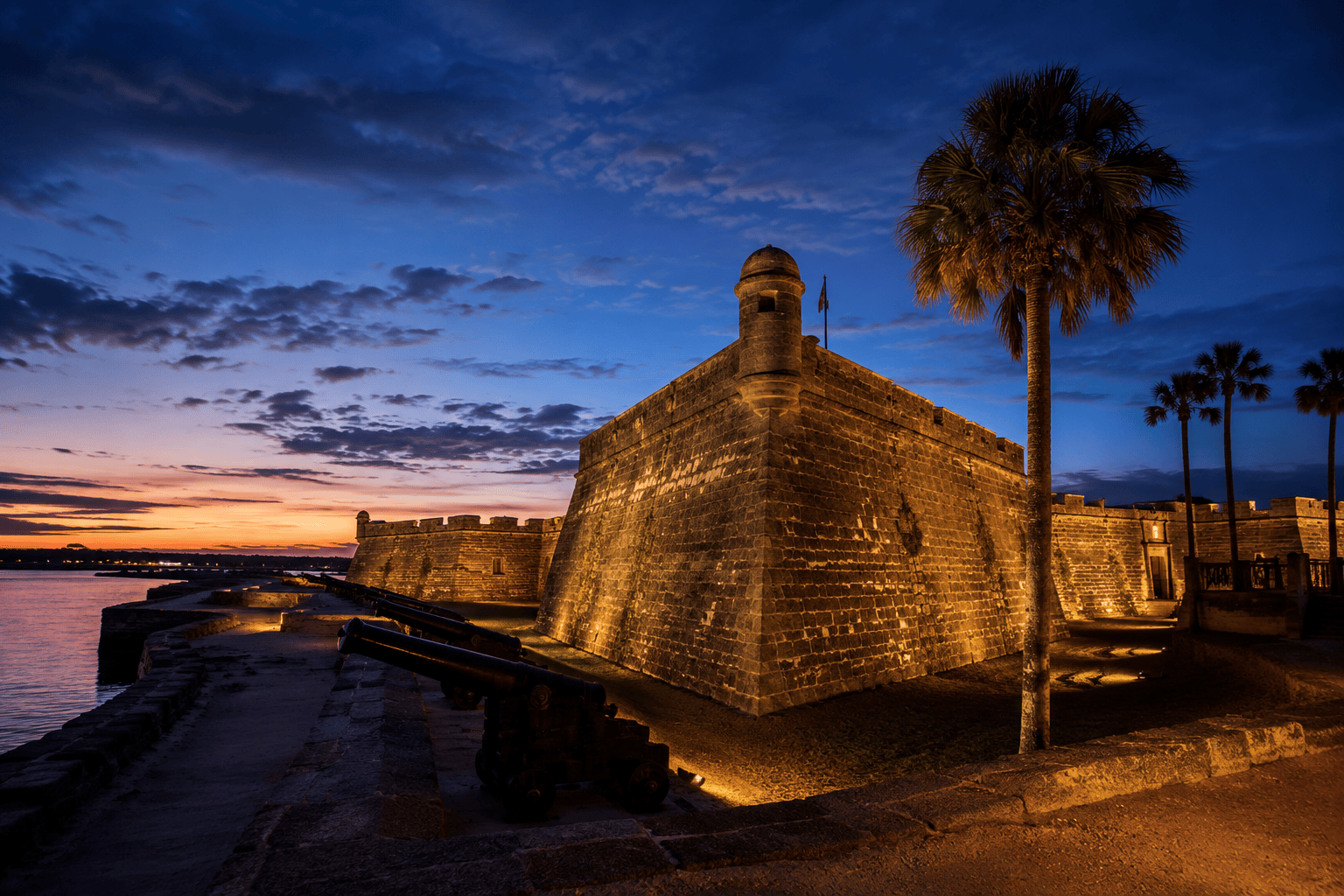
For weeks the group was routinely beaten, degraded, and deprived of necessities by their captors. Despite being a prime target of the cruel treatment, Solomon continued his attempts at intimidation, using demanding tones, and threatening antics. Seeing the swaggering Cresson as a potential danger, the King ordered him to leave the group and proceed northward to St. Augustine, where the largest Spanish colony had been established. The remaining captives would be released an agonizing week later. This decree played into Cresson’s hands, allowing him to collect the gold before starting his journey toward the massive fortress, Castillo de San Marcos.
Following torturous weeks of lonely perseverance, Cresson, feverish with infection, and suffering with painfully blistered flesh, finally caught his first glimpse of the Spanish settlement. Emaciated, and pathetically weak, he confronted a new dilemma, realizing that the Spaniards would steal his fortune upon arrival. Pain, hunger, and exposure would be endured for yet another night while he devised a plan to protect the treasure he had labored to carry.
Choosing an area of heavy brush, at the edge of a clearing where three rivers converged, two miles south of the outpost, Cresson made camp. Fear of discovery overwhelmed his need for the warming benefit of a fire. The sacrifice of comfort ultimately saved his life.
Beneath an orange colored midnight moon, nearly one hundred natives from the Timacua tribe assembled at the river’s edge and marched to within yards of Cresson’s hideout. He was startled from his restless sleep by their approach. Quickly and silently, he crawled deeper into the snake-infested thicket, desperately stifling his panicked gasps for breath with one callused hand. From his new vantage point, he could see that the natives were giants, all standing at or near seven feet tall. His pulse quickened and his body trembled, certain that death was imminent when he realized that the fortune he had hefted for so many miles lay partially exposed at the edge of the clearing. Its discovery would surely bring about his end.
Cresson watched as a secret tribal ritual unfolded. Hoisted upon a litter of palm fronds and pine branches was the body of a leader of great importance. With menacing chants, five holes were dug, one in the center of the clearing, and four just beyond. While the fierce looking warriors surrounded the center gravesite, the corpse was gently and reverently lowered into the pit and arranged as if seated. The four given the privilege of carrying the body, silently completed the honorary duty of filling the grave. Cresson could never have anticipated what followed.
The pallbearers, showing no trace of fear or sadness, climbed into the four remaining burial pits, assumed sitting positions, and calmly folded their arms. Once properly situated, the tribal elders proceeded to bury the men alive as the rhythmic chants changed to sorrowful high-pitched wails. Two hours following the start of the eerie ceremony, the Timucuans marched off in a somber procession to waiting canoes and paddled south through the darkness.
Solomon Cresson, using only his bare hands, buried his stolen prize in the freshly dug soils of the gravesite, at the feet of the noble warrior, silently vowing to return one day to retrieve it.
More than three hundred years later . . .
Ready for the Adventure?
Scenes from the Story



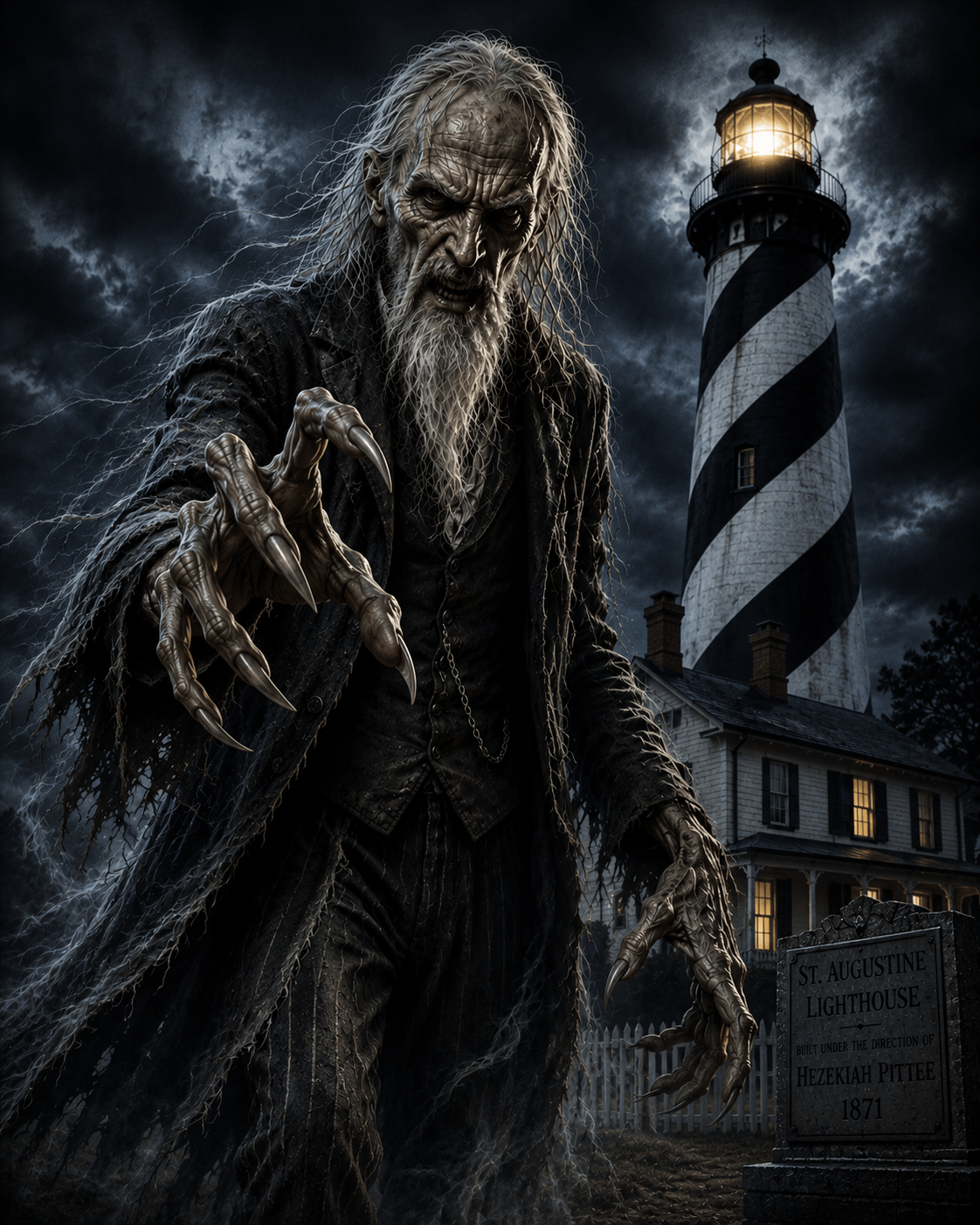

St. Augustine
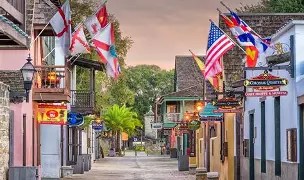
America’s oldest city. Jack Rackham’s backyard.